Cades Cove is a broad, grassy valley ringed by mountains in the Tennessee section of Great Smoky Mountains National Park, and it is the single most-visited destination in the most-visited national park in the country. An 11-mile, one-way loop road circles the cove past preserved 19th-century homesteads, three historic churches, and a working grist mill, while open fields make it one of the best places in the Smokies to spot black bears, white-tailed deer, and wild turkey. There is no quicker way to step into Southern Appalachian history, and no better drive for wildlife in the park.
The heart of Cades Cove is its 11-mile, one-way paved loop road, which opens at sunrise daily. Plan on 2 to 4 hours to drive it, longer in summer and during fall color when traffic and wildlife "bear jams" slow things to a crawl. There is no entrance fee for the national park, but Tennessee's "Park it Forward" program requires a parking tag any time you stop for more than 15 minutes: $5 per day, $15 per week, or $40 per year, available online and at park visitor centers and kiosks.
Vehicle-Free Wednesdays: from May 6 through September 30, 2026, the loop road is closed to all motor vehicles every Wednesday from sunrise to sunset, opening it to walkers and cyclists (including Class 1 and 2 e-bikes). It is the most peaceful way to experience the cove, so arrive later in the day to avoid the morning parking rush.
Getting there: the closest gateway town is Townsend, about 9 miles away via Laurel Creek Road from the "Townsend Y." From Gatlinburg, Pigeon Forge, or Sevierville it is roughly a one-hour drive. Midway around the loop you will find the Cades Cove Visitor Center and Cable Mill area, with restrooms, a bookstore, and seasonal restrooms; the Cades Cove Campground and camp store sit near the entrance.
Before it became parkland, Cades Cove was home to a thriving farming community for more than a century. The park has preserved a remarkable collection of log buildings strung along the loop, making it an open-air museum of Southern Appalachian life.
Highlights include the John Oliver Cabin, the oldest log home in the cove (built in the early 1820s and still standing without nails); three simple frame churches, the Primitive Baptist Church, Methodist Church, and Missionary Baptist Church, each with its own small cemetery; and the Cable Mill historic area, where a water-powered grist mill still grinds corn in season alongside the Becky Cable House, a cantilever barn, and a smokehouse. Don't miss the picturesque Carter Shields Cabin near the end of the loop and the Elijah Oliver Place, a short walk off the road. The entire cove is listed on the National Register of Historic Places.
The cove's open meadows, framed by forest, create ideal conditions for wildlife viewing, and it is widely considered the best spot in the park to see black bears. You are also very likely to see white-tailed deer grazing in the fields, plus wild turkey, groundhogs, coyotes, and the occasional fox or river otter.
The best viewing is at dawn and dusk, when animals move into the open. Spring through fall is most active. For your safety and theirs, stay in or near your vehicle, never feed wildlife, and keep at least 50 yards (150 feet) from bears. Bring binoculars and a long lens, and please don't stop in the middle of the road, use the pull-offs.
Several of the park's best hikes start right from the loop road:
Abrams Falls (about 5 miles round trip) is the signature hike, a moderate walk to a powerful 20-foot waterfall and wide pool. The Cades Cove Nature Trail is an easy loop into the woods, while Rocky Top and Thunderhead Mountain reward strong hikers with Appalachian Trail ridgeline views (strenuous). In summer, Gregory Bald is famous for its flame azaleas. Even short walks to the Elijah Oliver Place or around the Cable Mill area put you among the history without much effort.
Go early or late. Arrive before 9 a.m. or in the evening for the lightest traffic and the best wildlife, and choose a weekday over a weekend when you can. Fall is gorgeous but crowded, expect heavy traffic on October weekends.
Bring the basics. Services in the cove are limited, so pack water, snacks, sunscreen, and a full tank of gas; cell service is spotty. Allow at least 3 to 4 hours so you can stop at the cabins and churches. If you'd like to bike the loop, Vehicle-Free Wednesdays are ideal, and bike rentals are available seasonally near the campground.
No. Great Smoky Mountains National Park has no entrance fee. However, a parking tag is required any time you park for more than 15 minutes: $5 per day, $15 per week, or $40 per year.
Plan on 2 to 4 hours for the 11-mile one-way loop road. It takes longer in summer and during fall color when traffic and wildlife sightings slow things down.
The loop road is closed to motor vehicles every Wednesday from May 6 through September 30, 2026, sunrise to sunset. On those days it is open to walkers and cyclists only.
Early morning and evening, from spring through fall, when bears and deer move into the open fields. Always stay at least 50 yards from bears.
Enter via Laurel Creek Road from the Townsend Y, about 9 miles from Townsend. It is roughly a one-hour drive from Gatlinburg, Pigeon Forge, or Sevierville.
Yes. It is a one-way, paved, 11-mile loop that opens at sunrise daily, weather permitting.

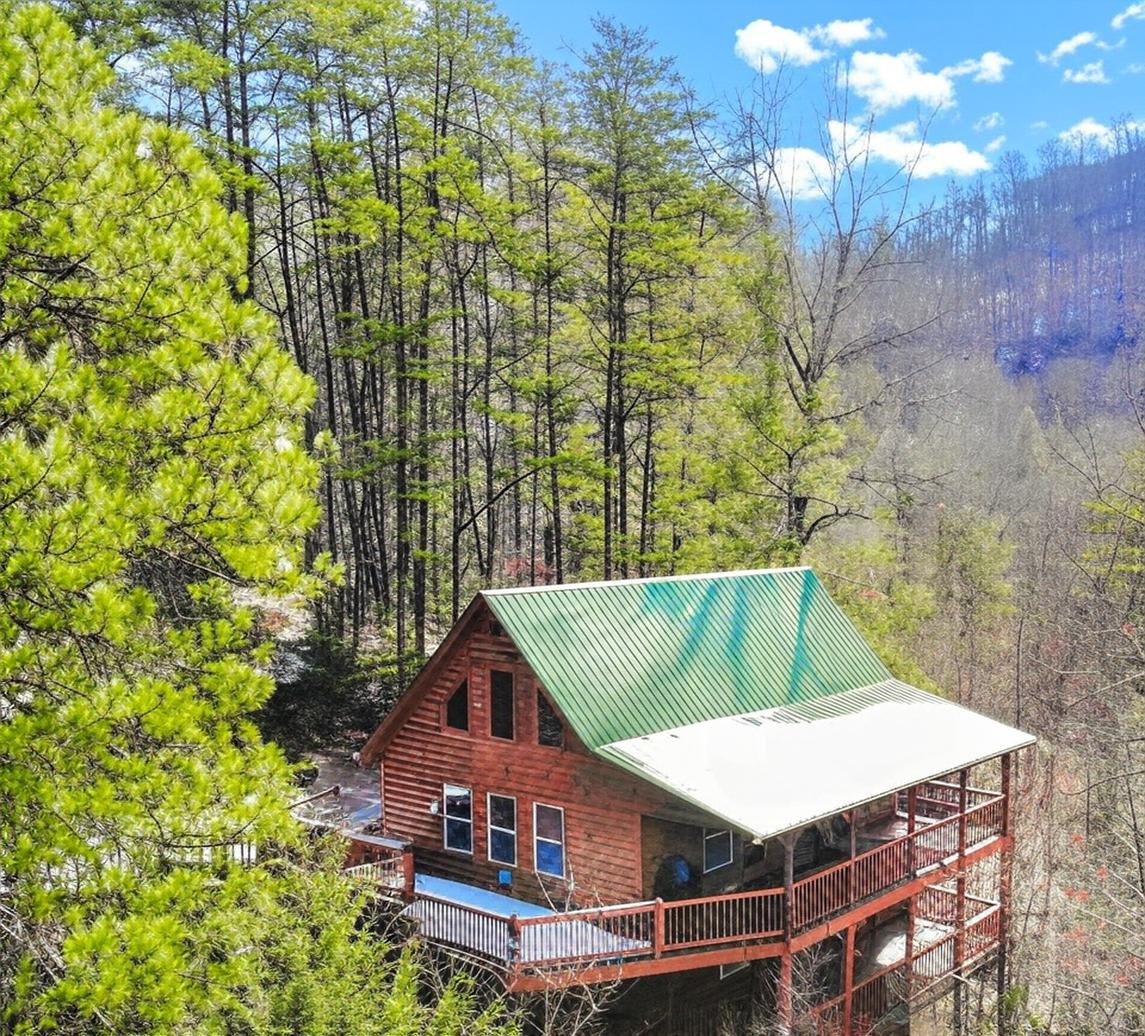
5-bedroom cabin sleeping 12, on the quiet Townsend and Wears Valley side near the Cades Cove entrance.

5-bedroom cabin sleeping 14, a short drive from the Townsend Y and Cades Cove Loop.

See every luxury Smoky Mountain cabin near Cades Cove, Townsend, and Wears Valley.